
p.r.o.m.p.t.

P.R.O.M.P.T. — Operational Decision Architecture System
P.R.O.M.P.T. is an operational framework designed to develop decision-making, behavioral stability, and performance under pressure across law enforcement environments.
It is not a set of techniques. It is not a theoretical model. It is a system built to analyze, expose, and restructure how operators actually behave when conditions become unstable, time-compressed, and high-risk. The program is based on a fundamental operational reality:
Under pressure, operators do not rise to the occasion.
They fall back on the patterns they have reinforced over time.
P.R.O.M.P.T. exists to identify those patterns, test them under stress, and redesign them into stable, repeatable operational behavior.
The Core of the System: Behavioral Architecture P.R.O.M.P.T. is built on a critical shift: From: technique compliance procedural thinking To: behavioral patterns decision structure system stability under stress Operational performance is determined by: patterns latency consistency response after disruption Not by intention. Not by theory. P.R.O.M.P.T. is not designed to make officers perform better in ideal conditions. It is designed for one purpose: To ensure that when pressure increases, the system does not collapse into randomness. Operational excellence is not built in the moment. It is built in what is repeated.
P — Police Fundamentals R — Response
Before specialization, there is structure.
Before specialization, there is structure.
Every officer, regardless of unit or assignment, operates within the same core domain:
- response
- presence
- interaction
- decision
P.R.O.M.P.T. reinforces the non-negotiable baseline:
you are a police officer before you are a specialist. Without this layer, specialization becomes fragile.
Response is not reaction. Response is structured behavior under pressure.
Operational environments do not allow time for complex reasoning.
They demand immediate, pattern-driven action. The objective is simple:
reduce unnecessary action and increase decisional clarity.
Because in real operations:
Wrong fast is worse than controlled correct.
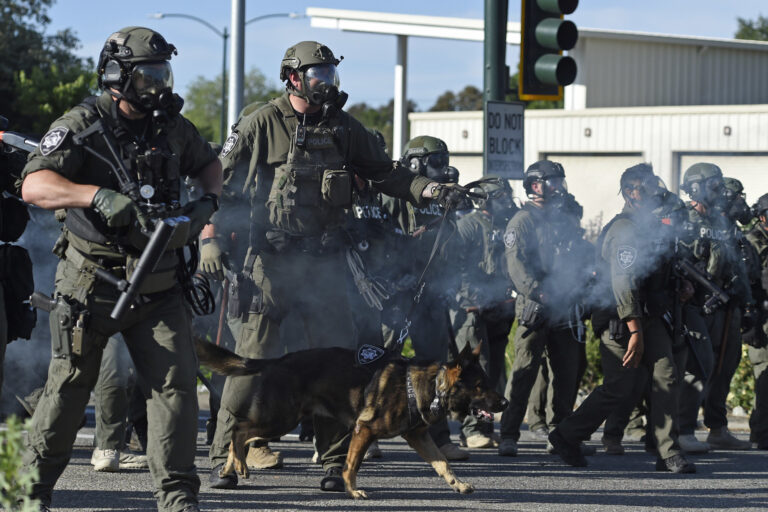
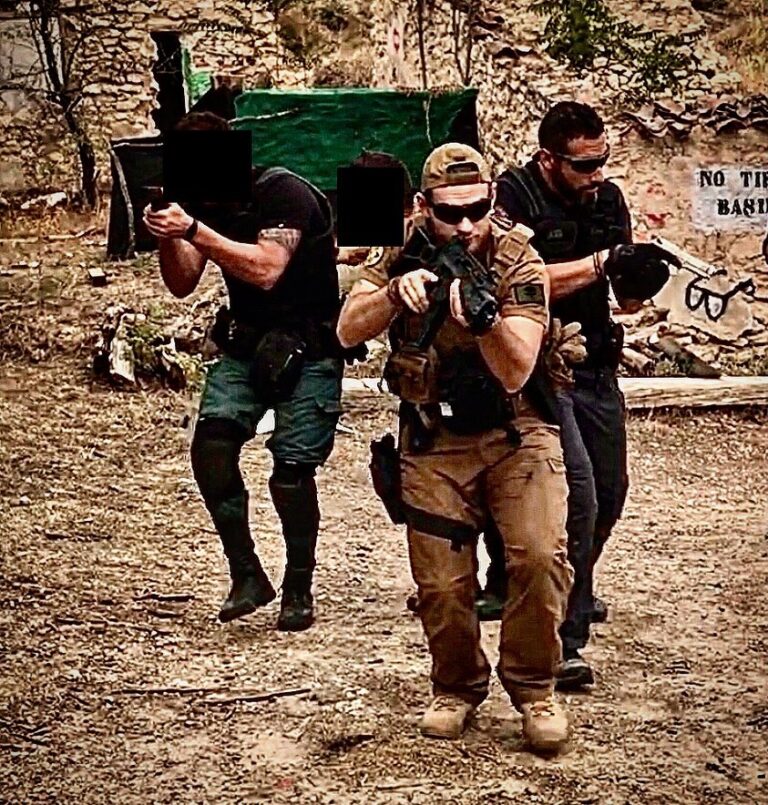
O — Operational Management M — Mindset (Active Mind)
No technique works without mental readiness.
Most failures do not come from high-risk events. They come from mismanaged low-risk situations that escalate.
Officers must be able to:
- manage attention
- detect subtle risk
- maintain control over evolving environments
Loss of attention is one of the highest operational risks.
P.R.O.M.P.T. introduces the concept of the Active Mind:
- continuous awareness
- presence under repetition
- readiness without tension
This is not motivation.
This is functional mental positioning.Every officer must operate with the understanding that:
There is no such thing as a routine intervention.
P — Patrol (Always On)
Patrol is not a unit. It is a condition.
Every officer:
- represents the institution
- is exposed to risk
- is a potential target
We expands patrol beyond assignment and into permanent operational presence:
- environmental awareness
- behavioral positioning
- risk perception
You are not “on patrol.” You are always in the system.


T — Techniques (Context-Based Application)
There are no universally “best” techniques.
There are:
- more effective techniques
- less effective techniques
- context-dependent techniques
P.R.O.M.P.T. does not impose technique.
It builds the ability to:
- evaluate
- adapt
- select
Techniques are tested in controlled environments, not discovered in real operations.
Because:
You do not test limits in the field.
You expose them in training.