
Assistance to the wounded in tactical operations
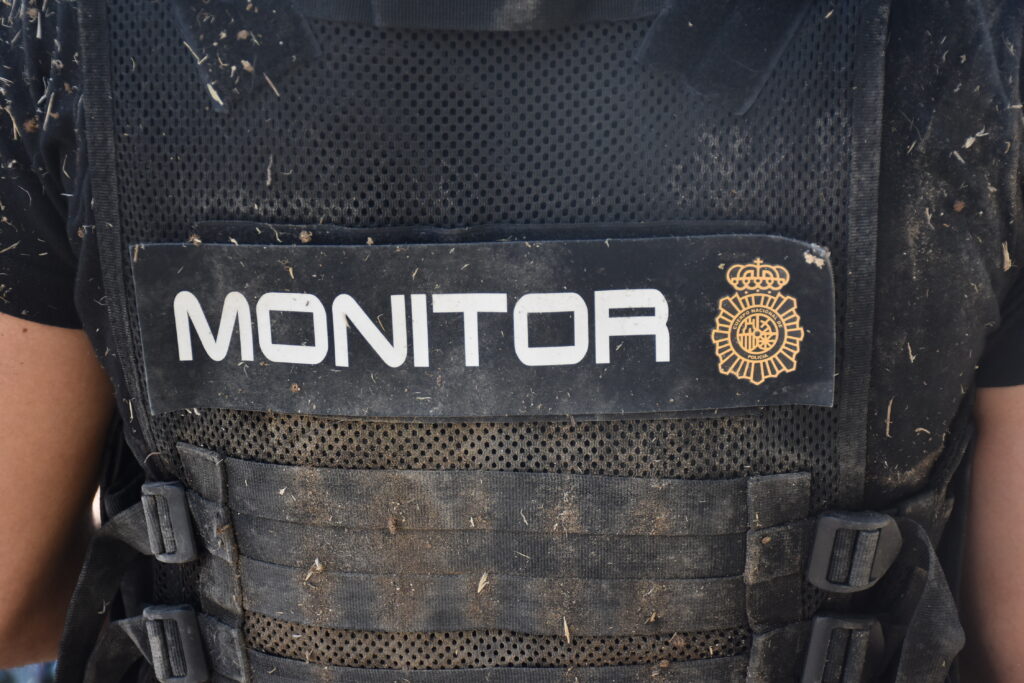
Sometimes the best is also found in something little known.
Tactical / operational courses can be found everywhere and on every site. Understanding how serious and operational these courses actually are can be very, very complex and not without risks.
I am actually talking about risks, as investing figures, sometimes very important, investing our time to then learn knowledge that we would have gladly done without… It is certainly not very stimulating or pleasant.
As Lt. Col. Dave Grossman in his books (here his podcast interview) operational tactical work must pass from training that teaches the participant, a whole series of automated behaviors, where muscle memory directly affects the results, life or death, of the operator in question.
As you can well understand, therefore, taking a course where we invest time and money “empty”, not only could make us lose the latter, but could also insert in our muscle memory some movements that, in the operational field, could cost us a lot very expensive.
Moreover, the best courses are not always the prerogative of well-known and renowned realities. Sometimes new realities, still little known and not very present on the marketing landscape, can on the contrary be wonderful surprises.
Precisely for this reason, in this article we talk about our experience with CALCOP and the Assistance course for the wounded in tactical operations.
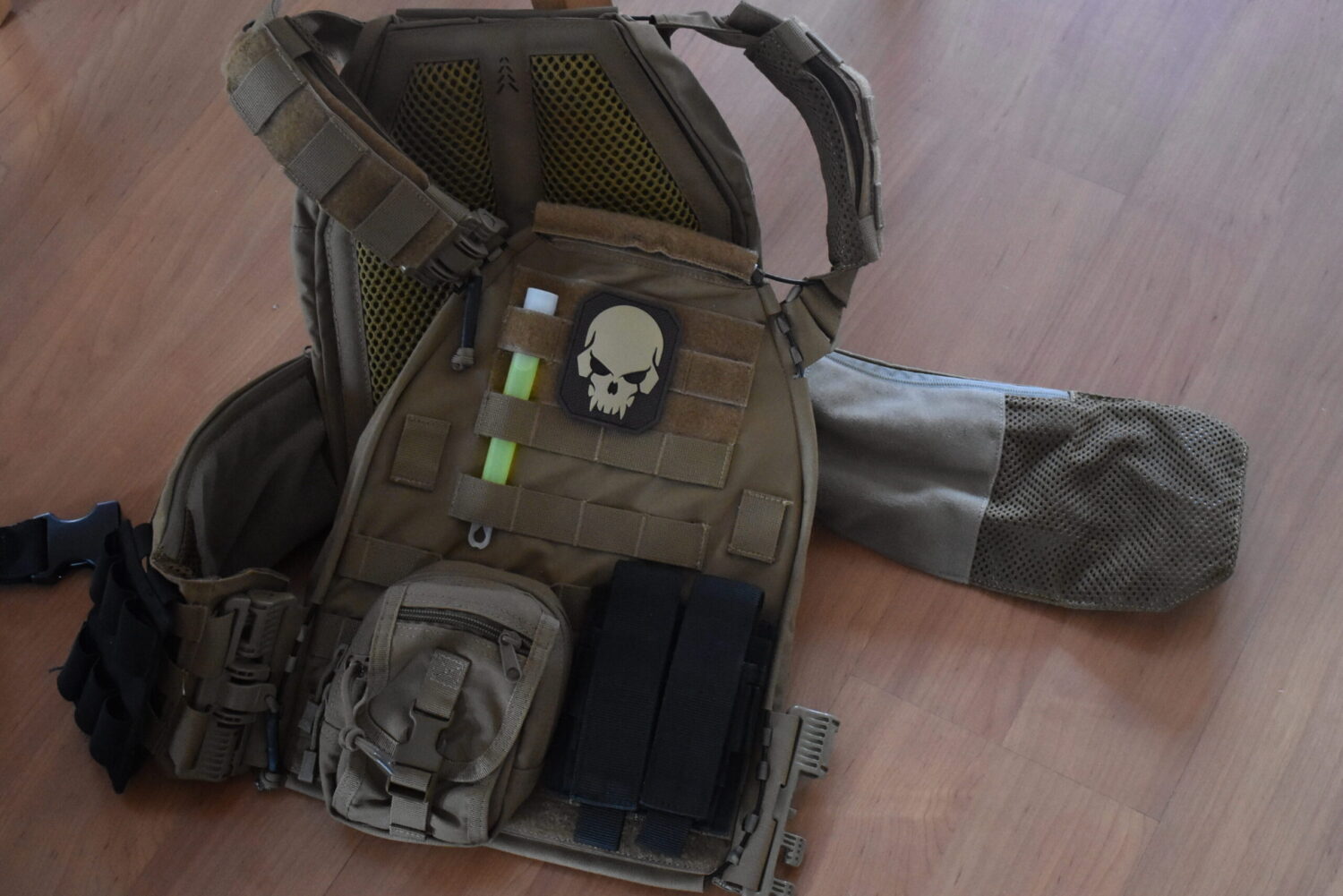
Our first contact with CALCOP took place a couple of months before the event itself, where the director, Calero, sent me a very courteous private message to invite us to attend the course in question which would take place in the first two weeks. September 2021.
As is my habit, I always respond to any request, especially if made with courtesy and education.
In his message he explained to me the course, which immediately aroused my interest since it was a type of topic on which I had been looking for some time.
Your request surprised me slightly, since CALCOP was not one of the realities that I had taken into consideration to carry out our analyzes.
At his kind request which, as I said, aroused my immediate interest, I immediately followed up my request to further analyze what I could see about their online presence.
With amazement, the answer was not particularly successful, I realized that they still had no online presence, if not the instagram profile and a digital flyer promoting the course in question.
Observing their online presence and the flyer, I was quite doubtful in accepting the kind proposal, in fact the photos and videos (unfortunately and conspicuously made with iMovie) were not extremely “professional”, and the flyer, you could see clearly, was a clear selfmade.
My reflection, whether to participate or not, was therefore based on two main aspects:
- The course is not professional, sketchy and, in fact, a waste of time
- The online part simply has not been developed adequately due to lack of depth and greater concentration on the content of the course itself.
My choice was, therefore, to participate by betting on the second option and assuming that the person who directed the “operation” was more interested in the training aspect and less marketing.
Once the decision was made, I communicated our presence to Calero, ours as I always move with my colleague Toark (trained, trusted and educated companion, as well as my nephew).
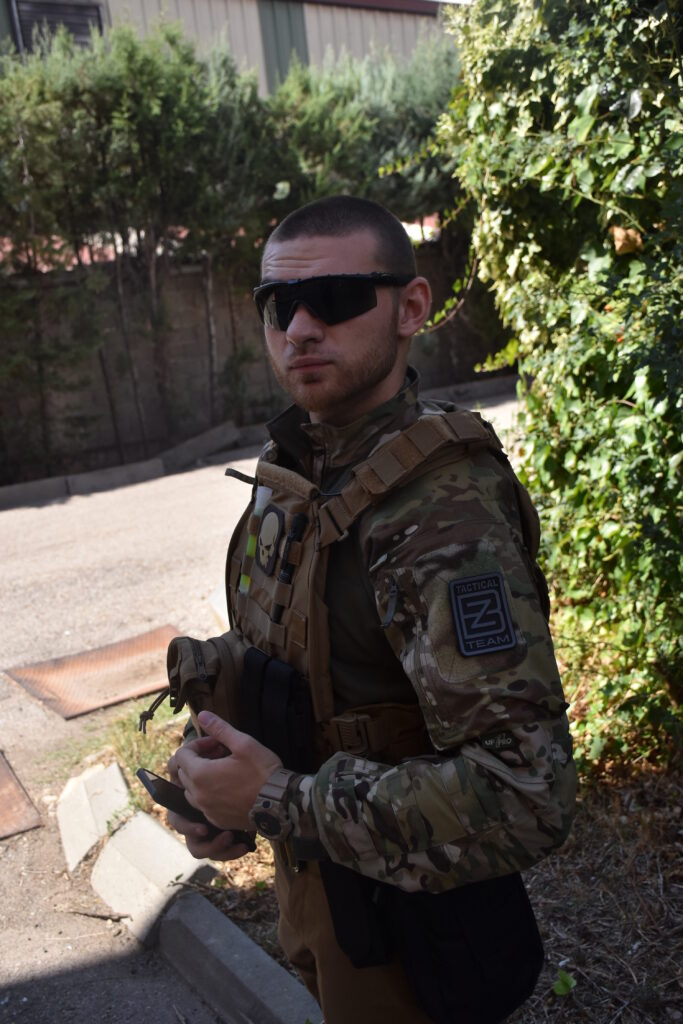
After I joined, I began to carefully follow subsequent communications for the course itself.
The pre-course
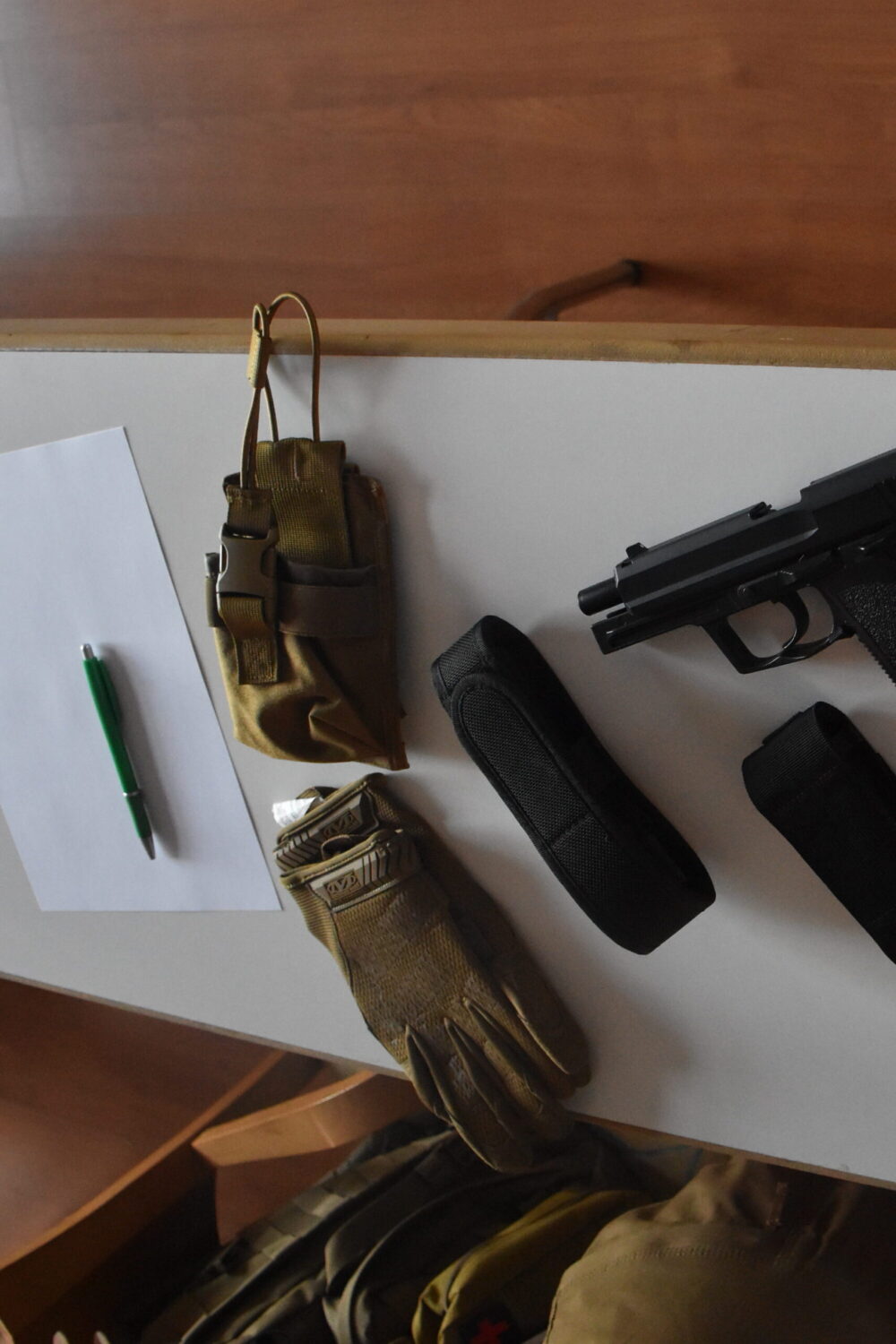
In the following weeks I did not see a particular promotional information traffic, however I was able to see a photograph where, Calero himself, declared that he had collected the medical training kit useful for the course.
Looking at the training kit, I thought that, in fact, my bet was quite correct.
During the preparation for the course, Calero was very diligent in passing us all the necessary information, both for the place where the work was carried out and above all by specifying the affiliated structure where to stay for the night. The course, in fact, included lunch for the three days, included in the sum of 165 euros, while travel and accommodation were the responsibility of the participants.
Once I received the information of the structure, I immediately proceeded to request information for the reservation. The assistance of the structure, called “university residence Giner de los Rios” in Alcalà de Henares (Madrid), was rather cumbersome. In the beginning, trying to make the reservation with the promotional code to get the participant discount, the website of the structure gave me the impossibility of accessing the complete structure.
By sending a request to assistance and after a few days, I was able to book the structure with the relative discount.
The week before the event, the whatsapp working group was created, where instructors and participants were present. General information of the course and material to bring were passed to the group. A rather normal aspect in all the courses we have attended. So far I had not yet been able to see anything in particular that attracted my interest, other than the courtesy of the instructor and the theme of the course itself.
About two days before the event, the first fact that gave me absolutely good hope for the starting course, was the sending, in the group, of the hourly information on the topics covered for all three days, with relative absolutely precise execution and times.
This aspect immediately interested me for the preparation that, from this moment on, would have pleasantly accompanied us.
We leave for the course
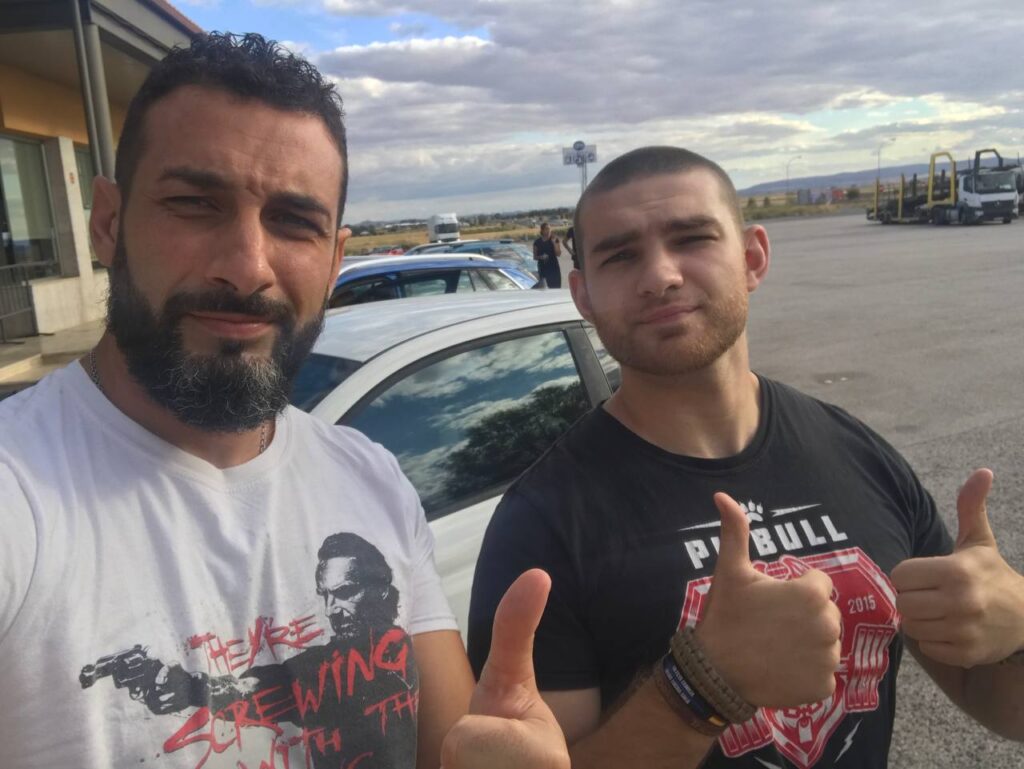
On Thursday, the day before the course, we rented the car, a small Fiat 500, and we went to the first destination: Alcalà de Henares, Madrid about 500 km away from where we live. The place, the university residence, was well presented, inside a real Campus (like those of the USA), where we took possession of our room complete with a kitchen and sitting room.
The first day
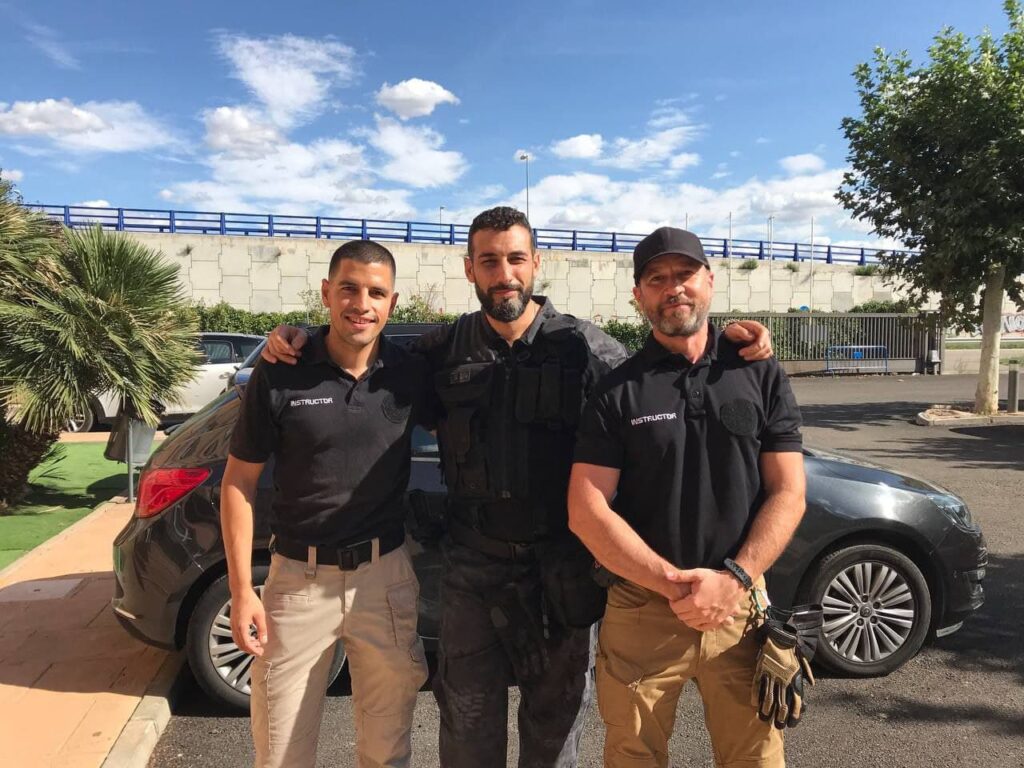
On the first day, once we have found the structure, a hotel, we come into contact with the instructors and about 9 participants. The instructors, between the CNP and the Bomberos, while the participants were from different bodies such as Local Police, CNP and Guardia Civil.
To my pleasant surprise, the course started at the exact established time, with a delay of a few minutes, punctuality that accompanied us throughout the first day.
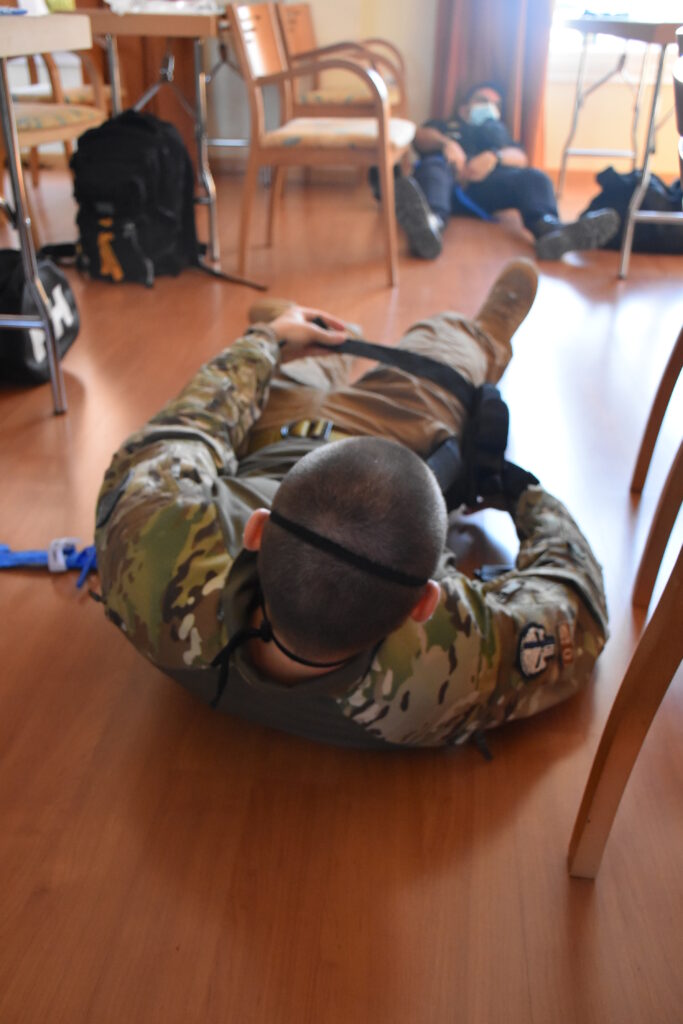
The morning took place through learning the first intervention techniques on various types of wounds, in which we learned how to use the torniquette and the haemostatic correctly.
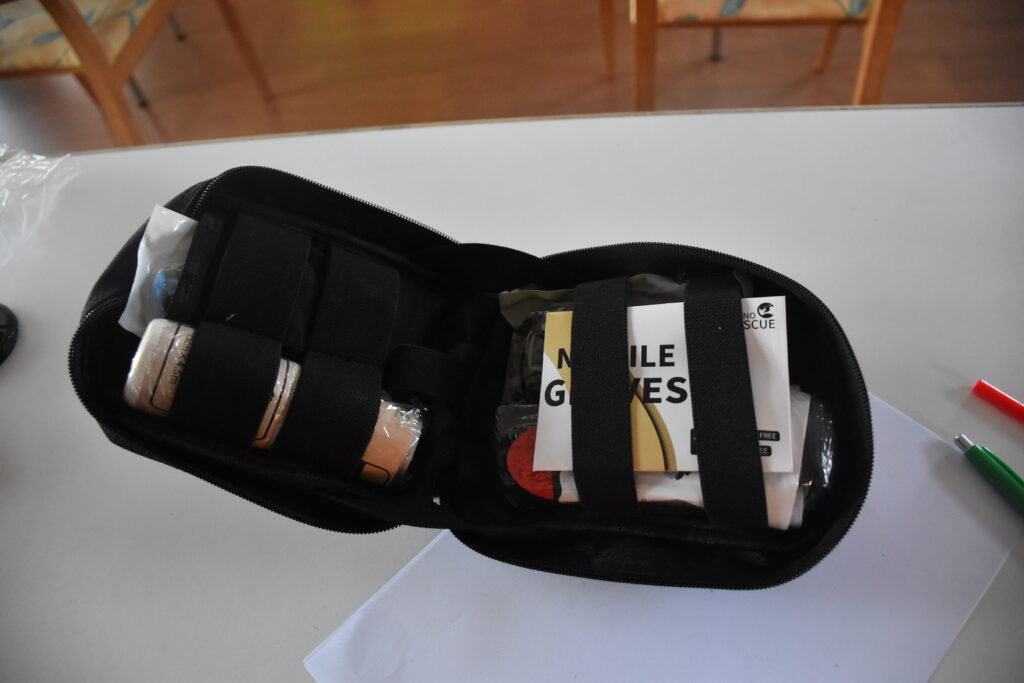
The extremely interesting aspect and the surprise that immediately earned a lot of points, was the fact that, included in the course, there was the assignment of that medical kit I was talking about before, only that, unlike what I thought, the kit should not be returned at the end of the work. Great great idea, great.
The kit is composed, in addition to the torniquette, also of scissors, cannulae, ciccatrizing powder, bandages and more, in short, an excellently structured kit. The instructors, however, were keen to point out that this kit was for training, providing a list of what we should have bought more … effective.
During the morning, a particularly appreciated aspect, the theory lesson was very often alternated with practical sessions of torniquette use, operative intervention techniques and exercises on transporting the wounded in adverse conditions or under enemy fire. A morning spent very quickly with a great balance between theory and practice, thanks to which the attention threshold has always been very high. At the end of the morning, always at set and precise times, we ate our meal in the hotel where we held the course.
At the end of lunch, after a short break, we started the lesson concerning first aid to the injured again, at the end of which we dedicated ourselves to further very physical practice: handcuffing techniques, and use of the extendable cane.
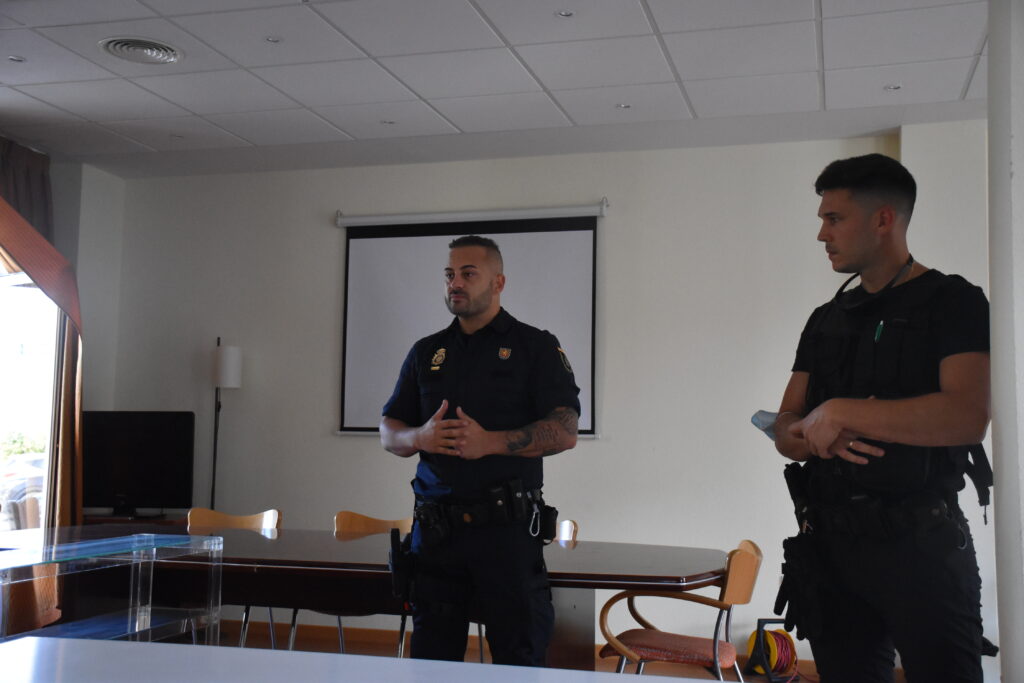
This lesson, which lasted about a couple of hours, was held directly by the instructor Calero, a serious and attentive professional and, which has earned him many points, a professional who knows what he says as he lives it every day during his service. It was easy to see how what he teaches is absolutely practicable without those “pindalic flights” typical of many training courses that teach very beautiful but impractical techniques.
After training hard, Toark and I, with great sweat given the heat, the course finished its cycle in perfect time previously established. The first day, therefore, ended with an excellent organization, great punctuality and practically non-existent “dead times”. Tango to underline this aspect, as, for those who have already, like us, participated in many courses in different parts of the world, these times of suffering and useless (not for nothing they are called dead) are very frequent unfortunately in almost all formations. These times, which are difficult to manage, are what mark the difference between a well organized course and a badly made course.
The second day
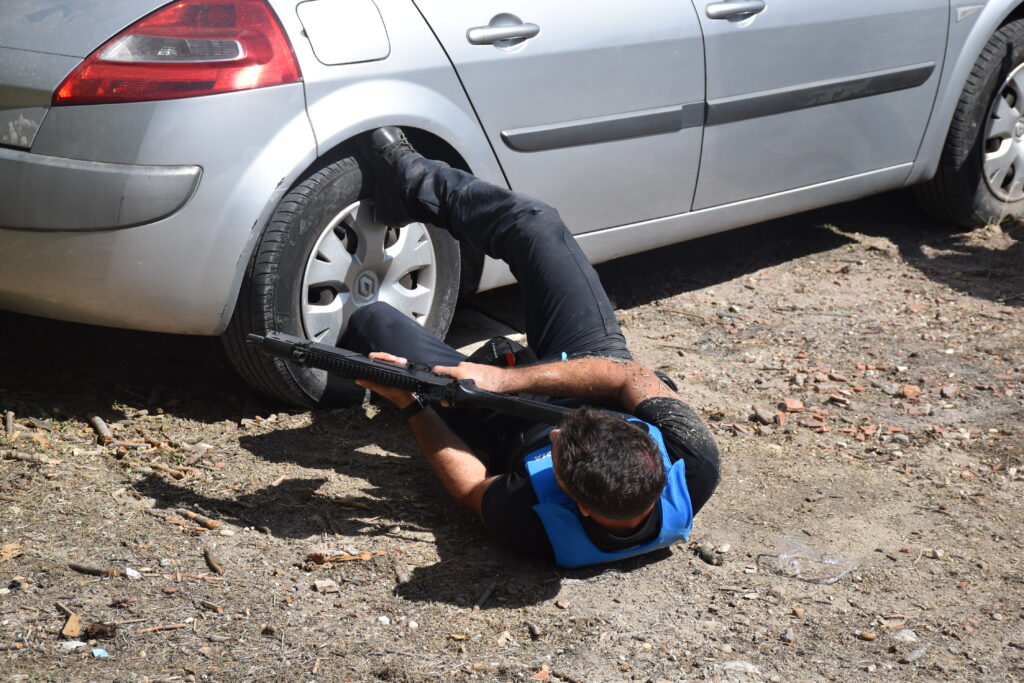
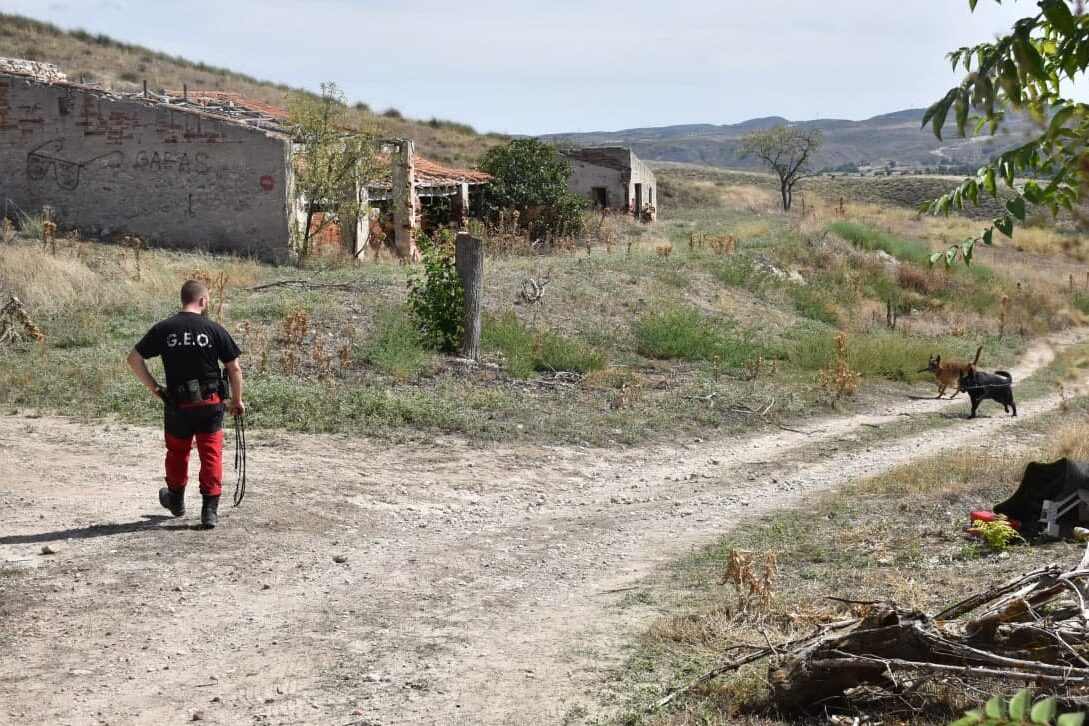
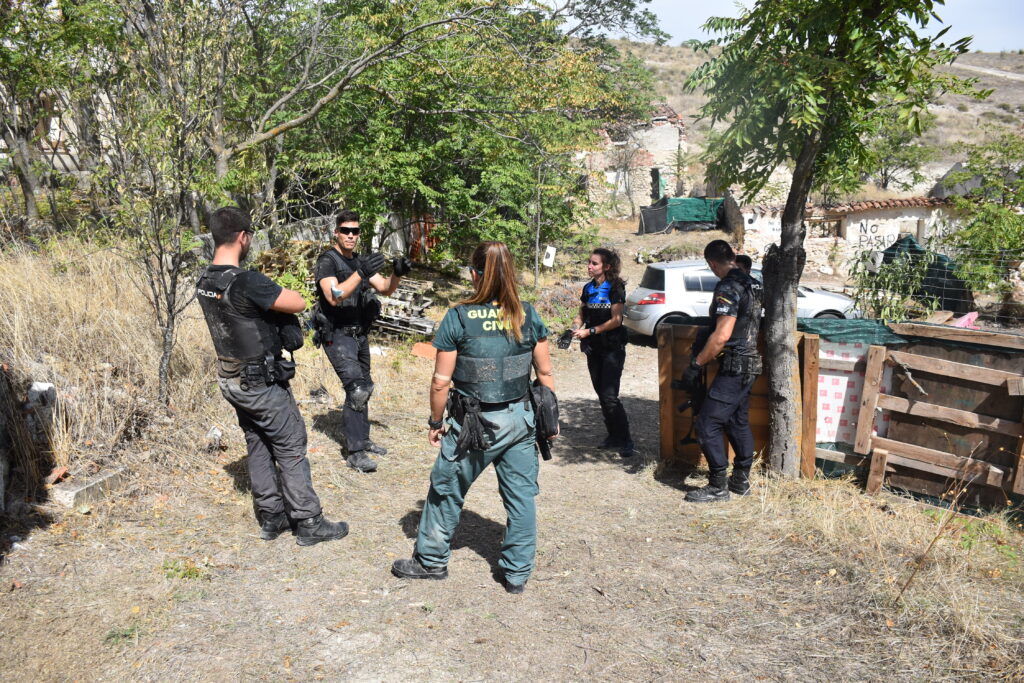
Once on the second day, always carried out with great attention to timetables, just like the first, we went to an area rather far from inhabited centers, a place dedicated to Air Soft called the “Eagle’s Nest”.
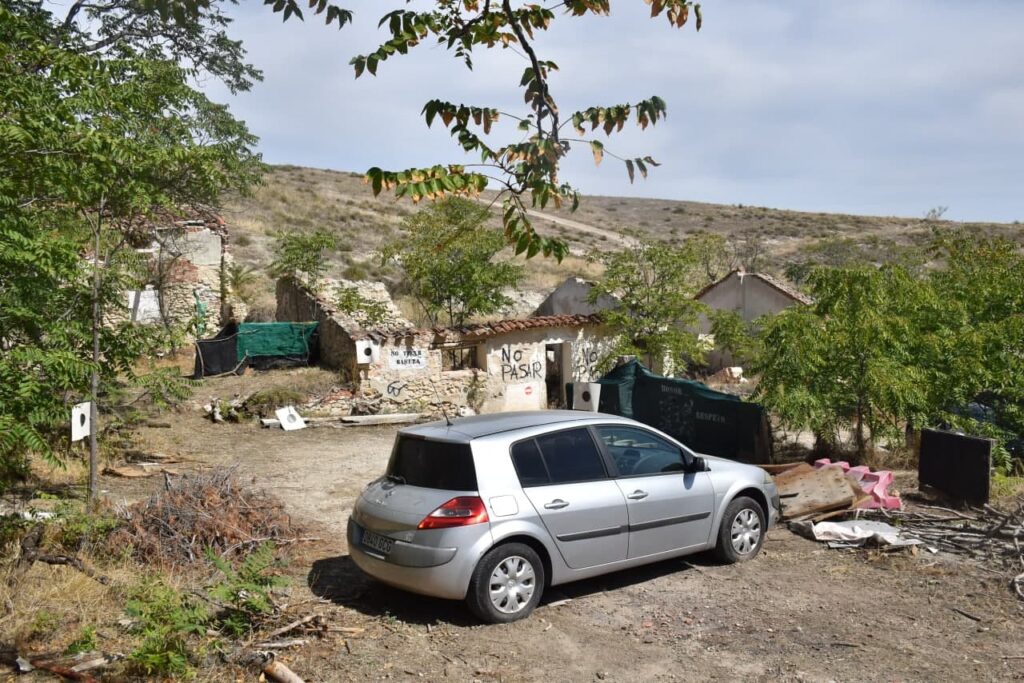
As soon as we arrived, Calero kindly accompanied us with his vehicle, we began to work practically through the use of parapets, firearm grip, entry into buildings, vehicle control and positions on the ground.
One day, with a small break for lunch, held in the splendid town of Chinchon, where sweat, dust and fatigue were the main feature, obviously always punctuated by practice with torniquette.
The third day
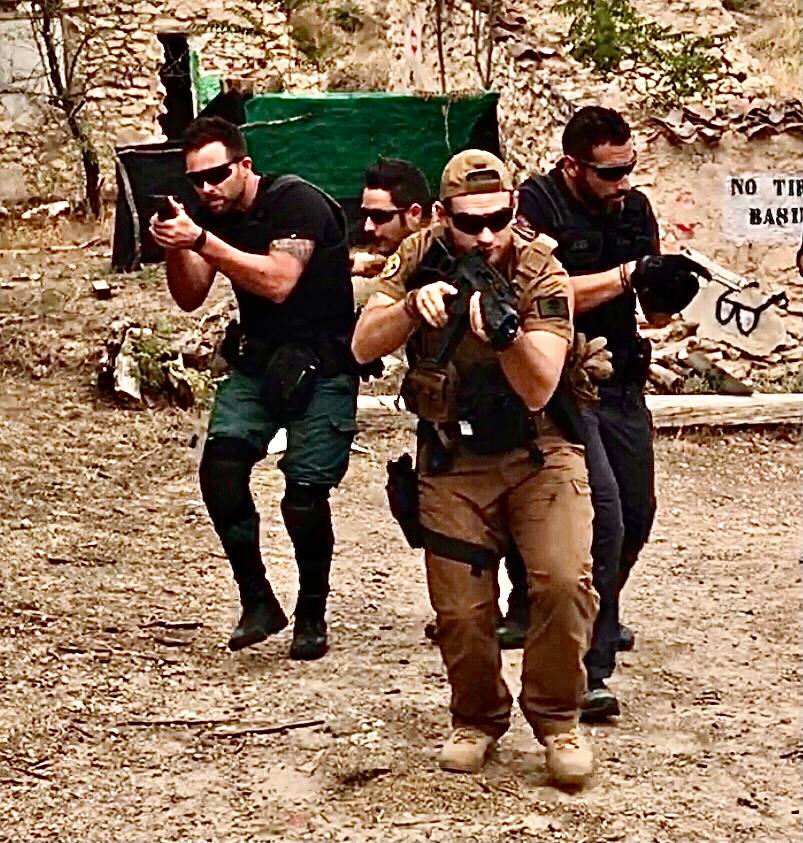
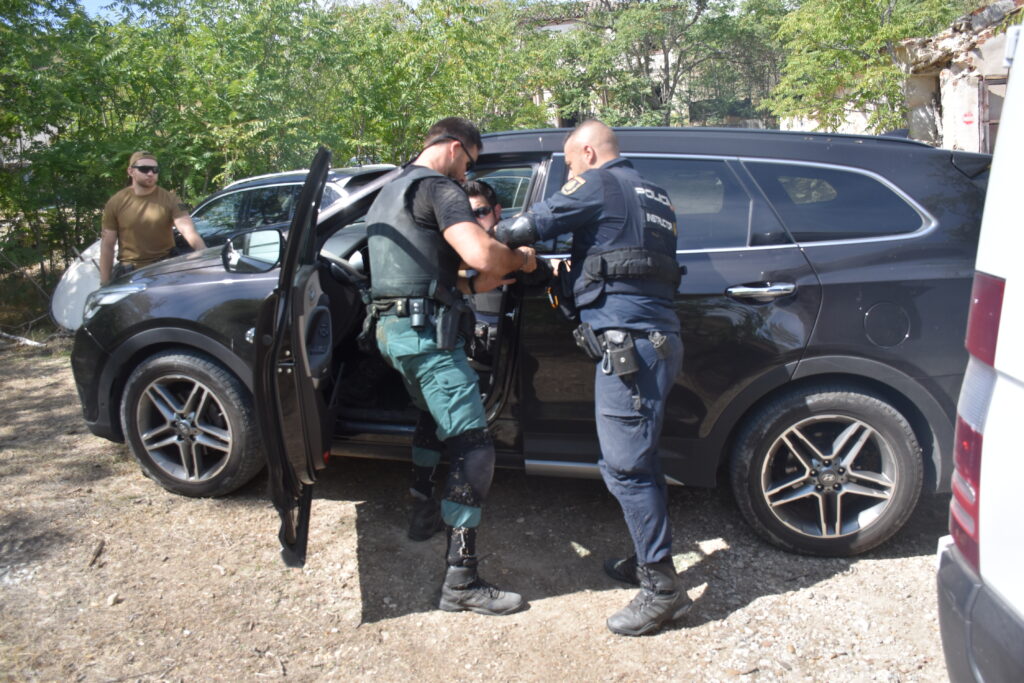
On the third and last day we went back to the same airsoft location to play what, in my opinion, was the highlight of the three days. Finally we have proceeded to the real effective simulation of the complete work, which starts from the call, radio communications, entry into buildings, firefights and much more.
This work has brought to light, through a crescendo of psychological tension well concocted by the two instructors, Calero and Manuel, who managed to make us work with great tension, and with that adequate modality typical of those who really know how to do those things. Even the third day, even more than the first, was carried out in the name of sweat, fatigue and dust.
Let’s analyze all the aspects
After briefly describing the course, it is important to focus on more precise aspects, so that we can carefully understand the positive aspects and those, possibly, to improve.
First let’s talk about the housing, that is the place where we actually stayed. The residencia Universitaria presented itself as a good alternative to classic hotels, with an interesting cost and well-structured rooms, where you can cook, if necessary, and, above all, in a quiet place. The first day we went to the cafeteria of the building for breakfast; the breakfast was not particularly provided (a little I expected it being more in the canteen style), despite this we managed to eat what usually feeds us for breakfast (my breakfast is nutritious). The bitter surprise occurred on the second and third day, when the cafeteria closed its doors and, to remedy the breakfast problem, they brought us two baskets with pre-packaged items. Personally, I found it unpleasant to close the cafeteria on weekends; even if it is a university residence, if you decide to open it to non-university people, it would be better to organize yourself more. Having removed this annoying aspect, it is still a structure which, if CALCOP continues to have an agreement, is an excellent option.
Logistics believe, however, that was the real Achilles heel of the course (I would say the only). Probably some military structures have decided at the last minute not to give us asylum for the course, which is why the instructors have folded as best they could on other structures:
- the first structure, that of the first day, in my opinion, appears to have been inadequate for the type training. Inadequate structure itself, too much presence of civilians, incorrect external training sites. Let’s understand: the hotel was fine, only unsuitable for the course in question. The only positive aspect, the proximity to the structure of the university residence.
- The structure of the second and third day, however, was perfect for the type of work, only, actually, too far from the place of accommodation. Despite the kindness of the instructors, who accompanied us with their cars, the structure was actually too far and too far even the place where we had lunch.
In general, therefore, the training sites were not, in my opinion, suitable for the course, be it by type of structure or by distance.

Now let’s talk about the balance between theory and practice, another very important aspect that has earned a lot of appreciation for this course. It was a good balance between the two aspects, they managed to keep the energy and the attention threshold always very very high. Excellent time management and, above all, just to repeat myself, no downtime. The theory developed has always had a very very practical implication, no irrelevant information or strange conjectures were given to “reimplify” the training. It was all very direct and incisive.
The aspect, undoubtedly, of great interest was the increasing intensity of work, from start to finish. During the course you could not predict what would happen next or what the actions would be. If you were expecting an academic course sitting at the desk with teachers throwing up words… then you would have been extremely disappointed. For us 10 and praise.
Another very important aspect, especially for Latin culture, is food. Nutrition is a strong aggregator and, it would not have been the first time, to see the participants’ interest in poor food or unsuitable times drop. Excellent food every day, not too abundant and not too poor, the right balance. The only really bad aspect, absolutely not attributable to the organization of the course, was perpetrated by the local on the second day. In Chinchon, precisely at the Taberna “La Liria” in the main square, something happened that, personally, I find really bad. During lunch, meat cutlets were served (we don’t eat meat but they found us a valid alternative), which, cooked in abundance, were left over. One of the course participants, a K-9 instructor who had his working dogs in tow, decided to take away the cutlets (paid for by the organization) to give to the dogs as they were left over. At this request, the owner of the structure refused and badly took away the leftover meat, justifying that the food was not for dogs and that she would rather have served them to the waitresses. A truly unfortunate fact for which, I hope, the organization will never again make use of this structure full of great rudeness.
The breakfasts of the residence, as I anticipated, did not drive me crazy, with the negative note of the lack of fresh breakfast on the weekend.
For the rest all very well.
Returning to punctuality, I would like to re-affirm the great organization of this course, the real spearhead. Excellent punctuality and zero downtime. Excellent, indeed I would say, superb!
Speaking of the instructors, we can say that both the Emergensa.es instructor team and the Calcop team did the job very well, perfectly timing everything. The only aspect to improve, in my experience, is a better management, linked to the second and third day, of tuning with a part of the instructors. On the second and third day, in fact, an instructor from the army on health issues accompanied us, with a different approach than the teaching staff who had accompanied us the previous day. It also happened that, during the tactical / operational intervention investigations, the same professional said things that were not strictly in line and not properly correct in terms of tactics, at times in apparent contrast with what the primary instructors said.
Apart from this smallness, Calero and Manuel were flawless professionals, with great experience in the field who were able to educate us correctly with practical methods, without laces or particular hairstyles; letting us see exactly what happens on the street.
At the end of the courses, the fundamental question is important to ask is “what have I actually learned?”. Personally I can say that I have learned a lot, both from the health point of view, despite having experience of working in the civil health emergency working on ambulances, I had never worked specifically on tactical extraction, haemostatic of this type and, above all, on the application of the torniquette. Also, with regards to handcuffing techniques, extendable cane and tactical / operational movements, I have learned a lot, refreshed a lot more. If I had to stop and find even a small flaw, I would say that I would not be able to find it. Three highly formative days.
Strengths and weaknesses: the weaknesses can be summarized in some aspects related to the logistics of the course, the promotion and the almost completely missing photographic part. On the other hand, the strong points are many and range from the preparation of instructors, involvement, professionalism, punctuality and great real content.
Did I like the course? absolutely yes, I think it is excellent, very learning and absolutely advisable.
Star ratings: from one to five
- course presentation *
- progress ****
- punctuality *****
- organization ****
- materials provided ****
- logistics ***
- quality / price *****
- recommended for: belonging to police forces
General evaluation ****
Great course, great professionals
Gracias por la autocrítica,sobre ella trabajaremos para mejorar.
Hubo cosas en la logística que a falta de 3 días de inicio del curso se nos denegó ,teniendo que buscar alternativas de urgencia ,a sabiendas del riesgo que podría suponer ,pero la otra opción nunca se nos pasó por l cabeza , la de Suspender el curso.
Nuestro objetivo es seguir creciendo y por supuesto dar una formación real,actual ,operativa y vanguardista ,y para ello necesitamos compañeros con Actitud como la que demostrasteis todos vosotros!
Enhorabuena por el trabajo!
Pingback: From Rookie to Pro: 5 Game-Changing Rules for Police Training – Commander Zero