
The patrol dog and its “devastating” bite.
One of the worst fears for all criminals and wrongdoers who find themselves faced with a Belgian Malinois or a German Shepherd charging at full speed.
Undoubtedly, a valuable and powerful asset in the hands of a handler, who can use it when needed, be it for their own safety or that of a fellow colleague.
Right?
Yes, or maybe no… Let’s say both yes and no!
No, I haven’t gone crazy; I just have years of experience in the Police that allow me to state that the legal framework and implementation protocols of the Police forces have indeed gone crazy. Even today, patrol K-9 units are trained extensively in various bite-related activities, and then, in actual day-to-day operations, the dog often can’t utilize the skills it has learned alongside its handler because the legal framework doesn’t allow it, thanks to “compliant” officials who probably haven’t had the chance in their careers to actually work on the streets and bring training and interventions up to date.
The result is a mixture of interest in the potential of the K-9 elite and a specific fear of its bite, and in this case, not the fear of criminals. The bite can be summed up in one word for the handler: “a serious issue”!
So, what to do then?
Why is there so much fear surrounding one of the most crucial skills that a dog possesses, both in terms of repression and prevention?
Let’s shed some light on the dog’s bite:
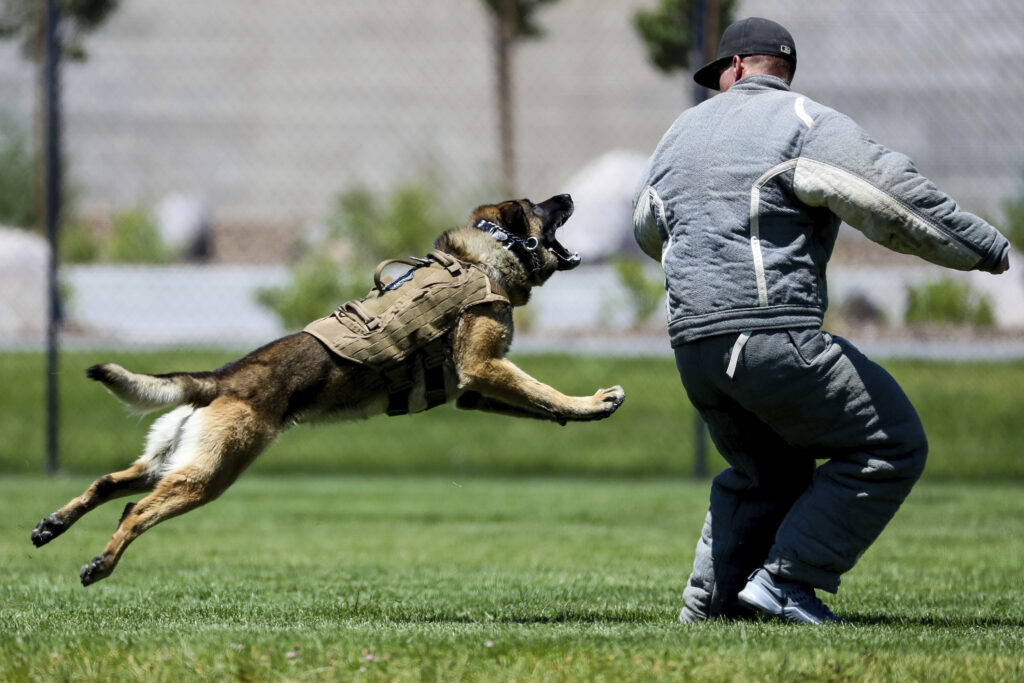
Let’s start by analyzing the physiology of a German Shepherd’s bite, for example.
The bite of a German Shepherd is influenced by various anatomical and physiological components. Here’s a brief overview of the physiology of a German Shepherd’s bite:
- Jaw Structure: The jaw of a German Shepherd is composed of a system of muscles, ligaments, and bones that work in synergy to provide strength and precision to the bite. The upper and lower jaws meet to form a solid grip.
- Teeth and Dentition: A German Shepherd’s teeth include incisors, canines, premolars, and molars. The canines, located on the sides of the mouth, are particularly important for the bite. The upper canines are usually longer and sturdier, allowing the dog to exert greater pressure when biting.
- Jaw Strength: Dogs, including German Shepherds, possess considerable jaw strength. Bite force varies among individuals, but overall, dogs have significantly stronger bite force compared to humans.
- Grip and Power: A German Shepherd’s grip can vary depending on the situation. They can use a “flat” grip to control a person or object, or a deeper grip to exert pressure. This flexibility in grip is one of the reasons why German Shepherds are often employed in K-9 Units.
- Adaptability: The dog’s jaw is capable of moving in various directions, allowing them to adjust the force and grip as needed. This adaptability is useful for both training and operational situations.
- Sensitivity: German Shepherds and many other dogs have remarkable sensitivity in their mouths. This means they can regulate the force of the bite based on the situation, avoiding causing excessive harm to the person or object being bitten.
But what happens when a dog bites a human?
When a human is bitten by a German Shepherd, several factors come into play that can affect the body due to the anatomical and physiological features of the dog’s bite. It’s important to note that the severity of the impact can vary depending on the force of the bite, the location of the bite, and the individual’s physical condition. Here’s a scientific analysis of what happens to the human body when bitten by a German Shepherd, based on the mentioned data:
- Force and Pressure: German Shepherds possess strong jaw muscles and powerful canines. The force of their bite can exert significant pressure on the target area. The sharp canines can puncture the skin and underlying tissues, potentially causing damage to blood vessels, nerves, and muscles.
- Tissue Damage: The combination of force and sharp teeth can lead to tissue damage, including puncture wounds, tears, and bruising. The canine teeth are designed to grip and tear through flesh, which can result in various levels of tissue injury depending on the strength and duration of the bite.
- Pain Response: The pressure and injury caused by the bite can trigger an immediate pain response in the bitten individual. The pain can be intense due to the trauma inflicted on the tissues and nerves in the affected area.
- Blood Vessel Damage: The force of the bite can damage blood vessels, leading to bleeding. Larger blood vessels, veins, and arteries that are close to the surface of the skin can be affected, resulting in bleeding and potential blood loss.
- Nerve Impact: Biting pressure can affect nerve endings in the area, causing both localized and radiating pain. The nerve impact can contribute to pain perception and affect the sensation and mobility of the injured body part.
- Risk of Infection: The puncture wounds caused by the bite can create openings for bacteria to enter the body, increasing the risk of infection. Bacterial contamination from the dog’s mouth or from the environment can lead to localized or systemic infections if not treated promptly.
- Potential for Psychological Impact: Being bitten by a dog, especially a powerful breed like the German Shepherd, can lead to psychological effects such as fear, anxiety, and trauma. The experience can have both immediate and long-term psychological consequences for the individual.
For all these reasons, and many more (which we will analyze in another article, specifically focusing on the damages that dog bites can cause), the use of the dog in its attack functions is considered to be like a: “I train it but don’t use it, too many issues!”
I remember many times, at the stadium on Sundays, in security services against potential public order disturbances, the attending official would approach us and ask:
“Does the dog bite?”
Aside from the rather obvious answer to this question, it represented the apprehension of the “official” and the inability, for the elite, to carry out their job, since after this “smart” question, the subsequent statement would be:
“Alright, then the dog in the transport crate in the vehicle.”
At this point, under these conditions, my question, as an expert and professional, arises spontaneously:
why do we continue to train dogs for biting?
The question, simple in its formulation, however, requires very deep reflections, reflections so profound that they call into question the utility of certain training practices.
Absolutely, we must first and foremost consider the role and function of the dog we are training. Whether it’s a police dog or a military member. Subsequently, we need to take into account the legal framework of the country where the dog will operate.
Since the dog, at least in several countries, is unable to perform its job in patrolling and maintaining public order, it is us, as the elite, who must embrace the transformation towards something different.
To think that such changes would come from the top is also sheer folly!
We cannot expect the “command,” which often has never experienced direct street work and has halted at Officer Academy studies, to be so interested or possess the necessary experience to innovate for the elite or come up with new and brilliant ideas. Very often, the careers of these individuals lie somewhere between the military and the political, so…
what could their main interest possibly be?
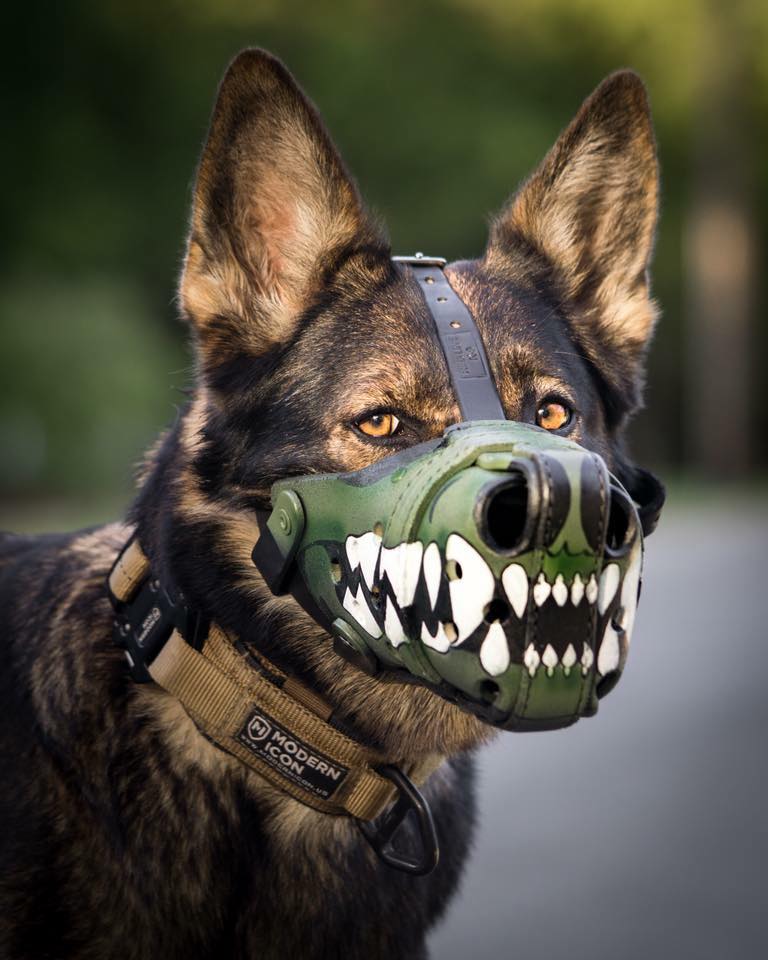
Today, many other techniques are far more effective and can represent a serious alternative to the dog’s work in patrolling and public order. Many top trainers already train certain police units using the “muzzle work”, a tool that, when properly trained with correct methods, is, in my opinion, highly efficient and effective.
We will discuss this in another article, without a shadow of doubt.
However, it’s important to clarify that as instructors, we must constantly be predisposed to innovate and ensure that such innovation is accepted over time. All innovations have an assimilation period that often stems from moments of strong resistance from the “Status Quo,” which wishes things to remain unchanged. The journey is long and perilous, not suitable for everyone.
There will always be those who “follow” and those who “innovate.”
The “muzzle work” I mentioned earlier is already well-known among professionals, yet it hasn’t been fully developed yet. Its development involves not only working with the dog but also requires forming teams, interactions that extend far beyond the K-9’s small “realm,” and necessitates broader integration among different branches of law enforcement. “Follow” or “innovate,” where do you stand?